114°E Hong Kong Reef Fish Survey
114°E Hong Kong Reef Fish Survey
Hong Kong – a tiny spot on the world map, but home to more than a quarter of all the known marine fish species in the South China Sea.
Few people think or talk about Hong Kong’s marine life. But with over 200 islands, more than a thousand kilometers of coastlines and geographically positioned in the sub-tropics, the potential for marine life is definitely worth a second glance.
While there are no true coral reefs in Hong Kong, there are a wealth of coral communities along much of the city’s coastlines, allowing for diverse marine life including both invertebrates and fish. Most people may imagine Hong Kong’s waters to be barren of life, but one of the first in-depth surveys that sought to document Hong Kong’s natural reef fish species carried out in the late 90s found more than 320 species of fishes. The survey furthermore predicted that ultimately Hong Kong may be home to about 500 reef fish species. The diversity documented was comparable to even the tropical Caribbean.
These findings provided an important first look into Hong Kong’s underwater reef fish diversity. Nonetheless, the marine world often remains out of sight and out of mind, and further research to continue to increase our understanding for the local marine life to inform conservation strategies was still found wanting after this initial effort.
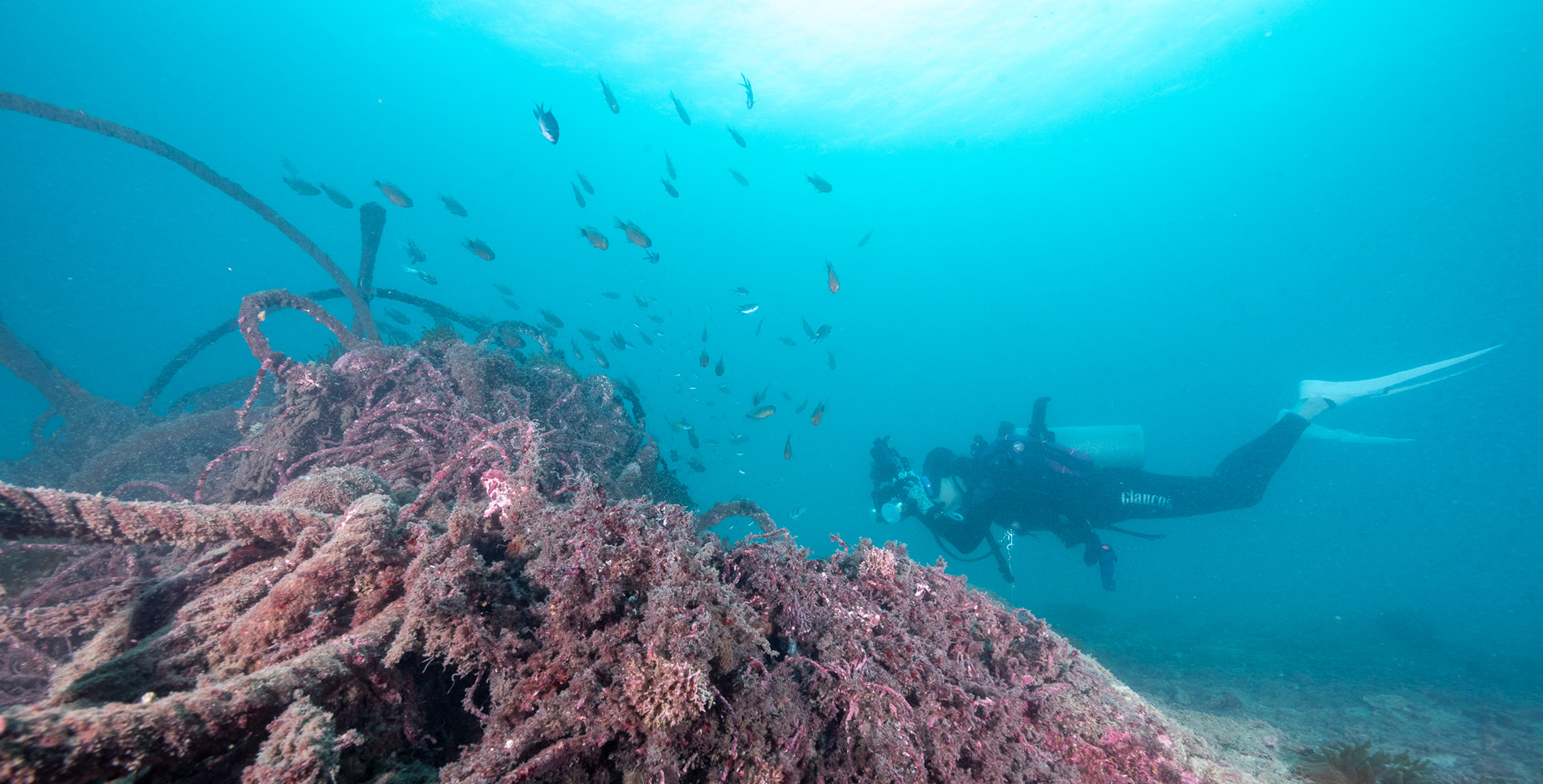
The 114˚E Hong Kong Reef Fish Survey (114˚E Survey) was established by BLOOM HK in 2014 to help to fill this knowledge gap. The survey recruits recreational scuba divers as survey volunteers, and sets out every summer to dive all around Hong Kong’s eastern waters and document all the species found, taking note of where they occur and keeping the available knowledge up to date. To date, more than 300 volunteer divers have joined the survey in documenting close to 400 species, with around 50 that are new to Hong Kong published records – evidence that there is still so much more to be found, and that Hong Kong’s underwater habitats are worth conserving.
Such research is important to showcase the diversity of Hong Kong’s underwater marine life and educate people about what we have. But apart from showing the beauty of the underwater world, this research is also is also important for informing future conservation measures, and more importantly, to establish a system for long-term monitoring to see how the marine life is changing over time.
One of the trends that the 114˚E Survey has observed is the appearance of tropical species found in the local sub-tropical waters – a possible sign of climate change where changing ocean temperatures are pushing species to shift away from their natural distribution ranges. Habitat loss, such as coral bleaching and coral loss, both human-induced and potentially as a result of climate change, are also threats that the local marine life will continue to have to face and survive in the future years. The 114˚E Survey aims to fulfil the role of documenting how these threats are affecting the marine life, and how the impacts are reflected in the reef fish diversity, so that we can know when and how to act.
Reef fish and coral ecosystems have an intricate relationship. While coral reefs obviously provide shelter, food, nursery grounds and habitat for reef fishes, studies have shown that no matter in coral reefs that are pristine or under environmental pressures, fish diversity is incredibly important to the health of coral ecosystems. Herbivorous fish, for instance, graze on the macroalgae that compete with corals for space and light and prevent the growth of new corals. By keeping algae levels of the area in check, the healthy growth of new corals is enabled. However, while such a relationship can promote coral growth and recovery, the long-term survival of both fish and coral are threatened by degrading coral habitats as caused by climate change.
Climate change has long been discussed as a leading cause of coral bleaching. Because bleaching is triggered by elevated ocean temperatures, the long-term temperature changes brought by climate change could mean that many coral reefs will fail to adapt as waters stay warmer, leading ultimately to the loss and degradation of coral habitats on a global scale. With degraded coral habitats, reef fishes that by definition depend on reefs in various life stages – and for some throughout the entirety of their lives – will ultimately also suffer the consequences.
The 114˚E Survey aims not only to document the changes as observed in Hong Kong’s reef fishes to inform conservation strategies, but also inspire and motivate conservation action from the citizen level both locally and in the region. Information such as biodiversity hotspots and observed changes over time are shared with decision makers, but regular citizens are also encouraged to learn about the survey’s findings on the 114˚E Web-Portal and look deeper into the wealth of marine life living right on our coasts. Although the ocean and its many critters may seem far away for many of us, our daily decisions can always make a difference to their survival. No matter in habitat preservation, reversing climate change, or species conservation, each of us has a choice between being a part of the problem, or a part of the solution.
More about 114°E Hong Kong Reef Fish Survey

Share: